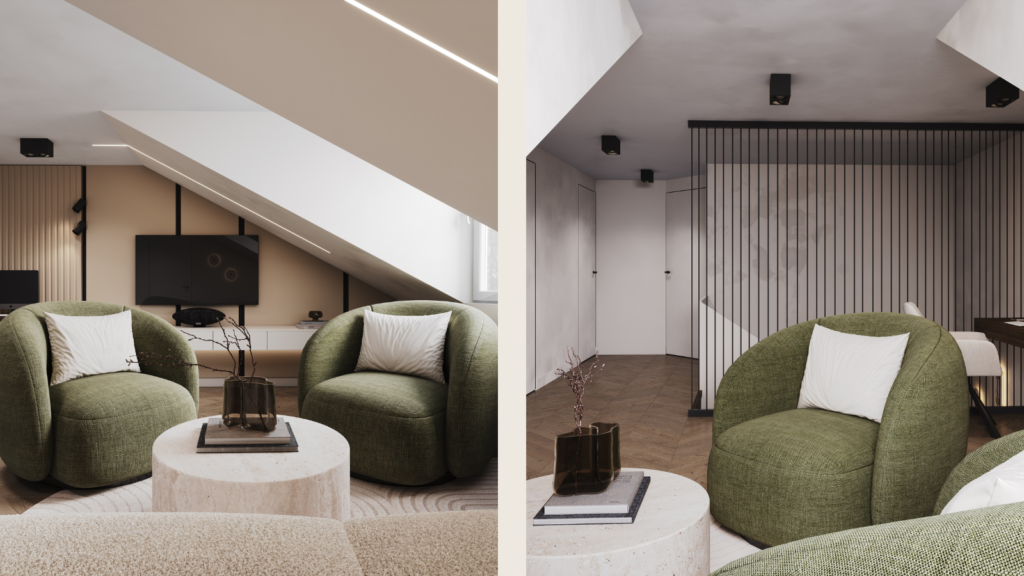


From upstairs living space design here is not just a series of functional choices, but a consciously composed experience of space, where design, use of materials and atmosphere are layered. The upstairs living space design the aim was not to create a separate world, but to subtly convey the character of the house through textures, lights and recurring motifs. This is the level where the dynamics of the common spaces subside, giving way to a more personal, intimate atmosphere - yet retaining the unity already established by the lower level.
In this article the upstairs living space design through a thought arc, showing how a space becomes both coherent and multi-layered, functional and emotionally connected.
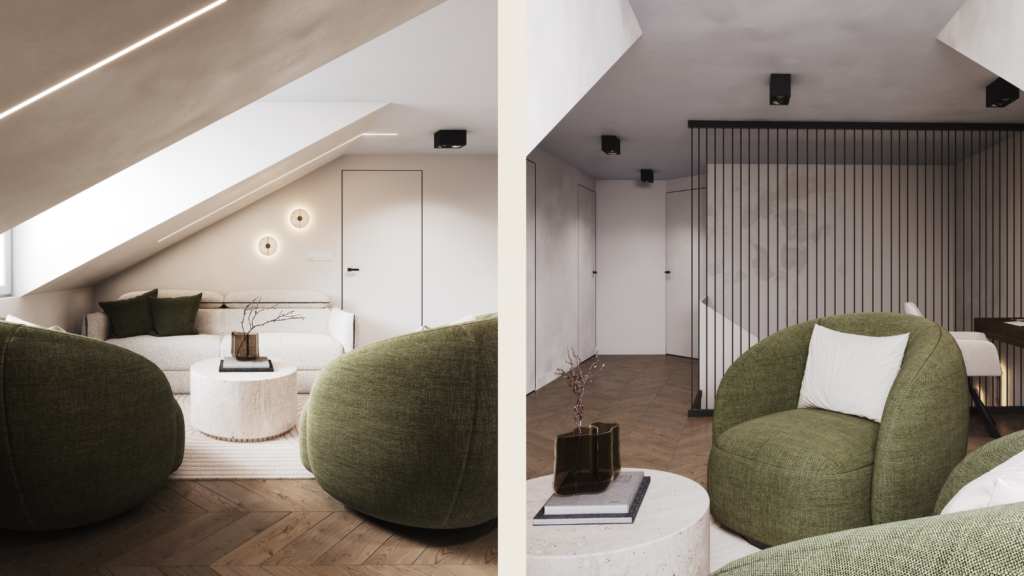
Textured upstairs living room
The upstairs living room was created as a deliberately looser, informal space. Here, the focus is no longer on representation, but on usability: video games, listening to music, a home office - a zone that is truly adapted to everyday life.
What was particularly important was the maintaining visual continuity. The familiar wooden boxes from the spaces below, the lime painttextures and characterful wood patterns are also present here, but in a more subdued form. This solution helps to ensure that the upper floor does not „break away” but is naturally linked to the lower floor.
This is where the upstairs living space design really makes sense: we are not creating a new concept, but rewriting an existing one.
👉 If you're thinking about a similar space, check out our services: Interior design
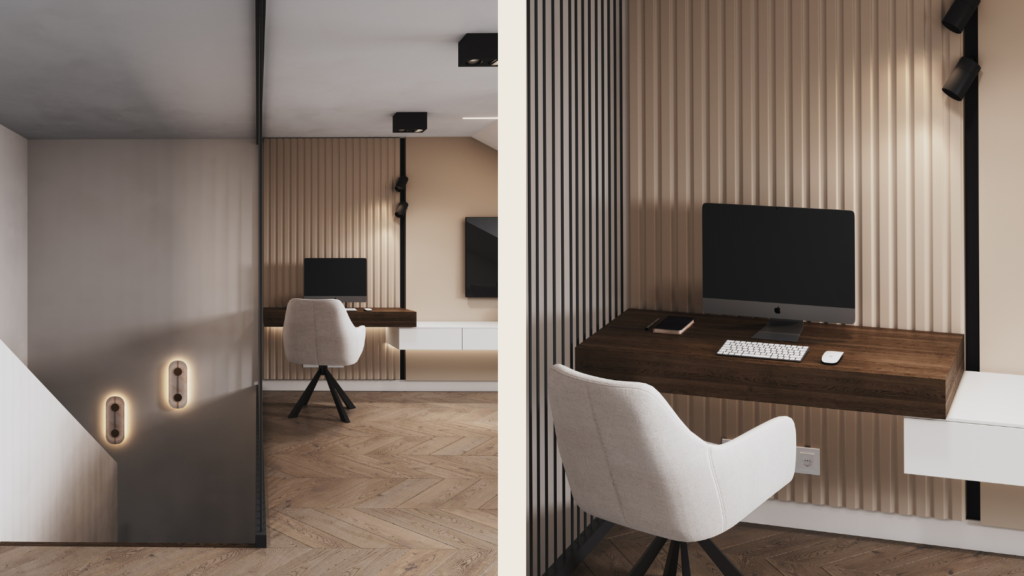
Soft elegance in the wardrobe
The design of the wardrobe has taken on a completely different atmosphere. While the living room is more neutral and functional, the focus here is on personality and experience.
The combination of beige tones, bronze details and dark glass surfaces creates a a clean, yet characterful interior results in. The aim was not just to „pack away”, but to make using the space an experience.
The combination of generous storage, well-organised surfaces and mood lighting creates a system that is both practical and aesthetically pleasing. This is particularly important in upstairs living space design, where the quality of private spaces determines the comfort of the whole home.
It doesn't just organise - it shows.
Piled bathroom
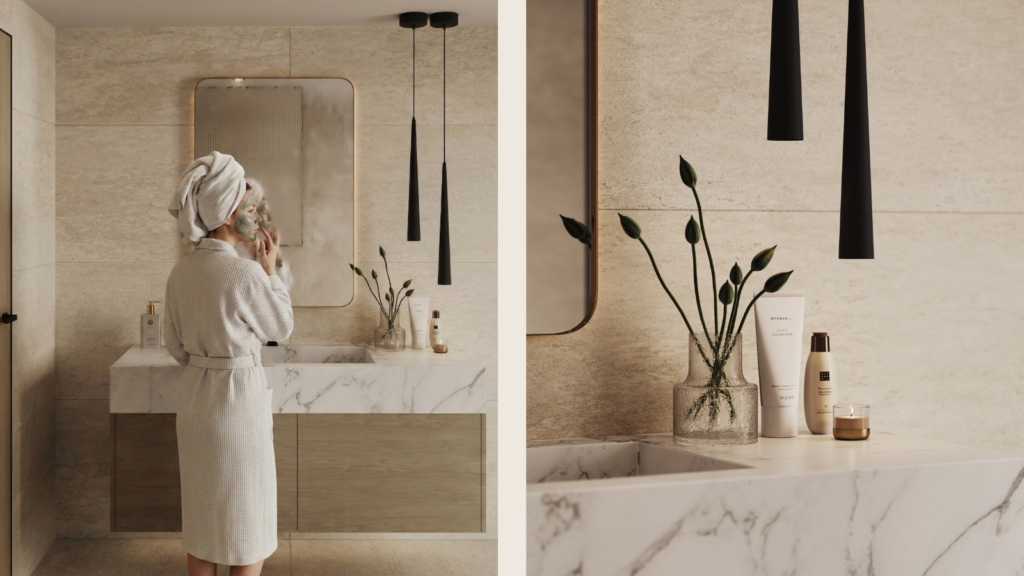
When designing the bathroom, the aim was to tie in with the downstairs sink, but not to duplicate it. This distinction gives the space its real character.
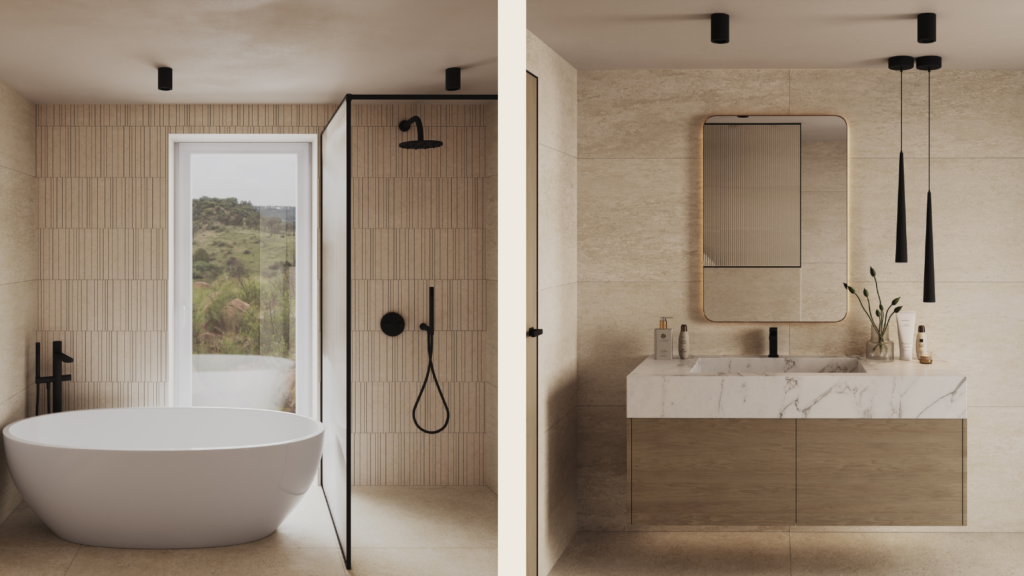
A combination of marble, bronze and black elements in a layered, rich use of materials results in. It was an important decision not to opt for a single finish, but to coordinate several surfaces.
This approach is not only more visually exciting, but also more timeless. The combination of different materials gives depth to the space, while practical solutions such as hidden laundry racks and thoughtful storage help with everyday use.
A well-designed bathroom is one of the key elements of an upstairs living space: it's where functionality and aesthetics meet most.
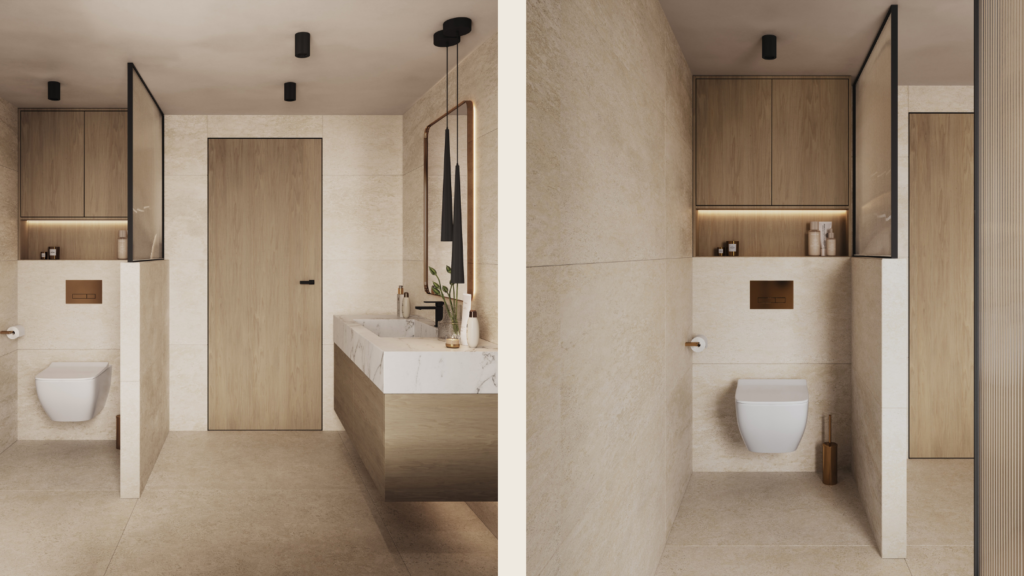
Another important aspect of the spa is the conscious use of contrasts. The combination of black and bronze elements does not break up the space, but adds layers and character.
Hiding the toilet was also an important decision: not all functions need to be visually present. This way of organising the space results in a much calmer, more uncluttered overall image.
And the presence of a shower and bath together makes it more usable: space is not a compromise, but a choice.
It's clean, but not simple. Functional, but not boring.
Parental networks designed with smart solutions
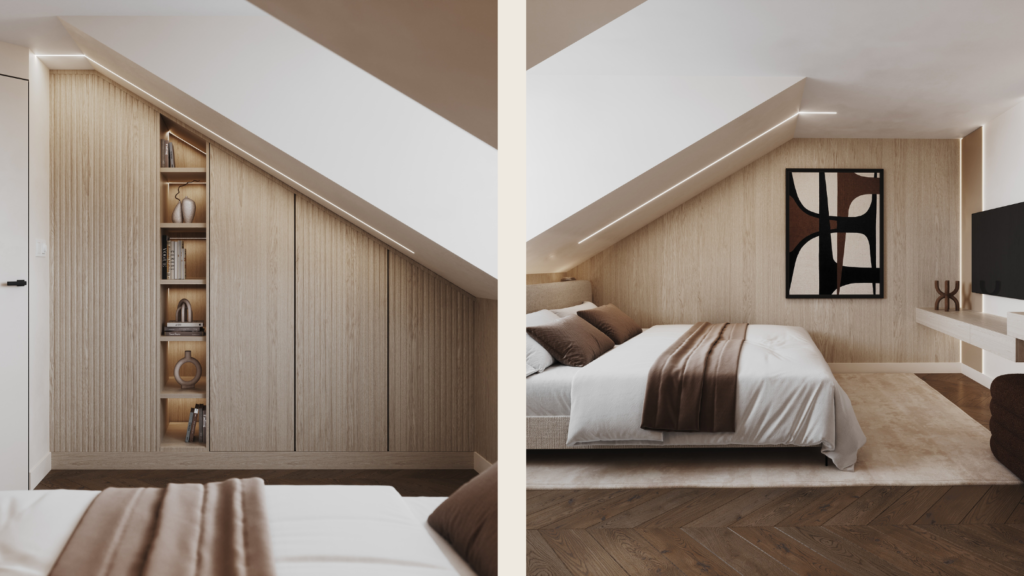
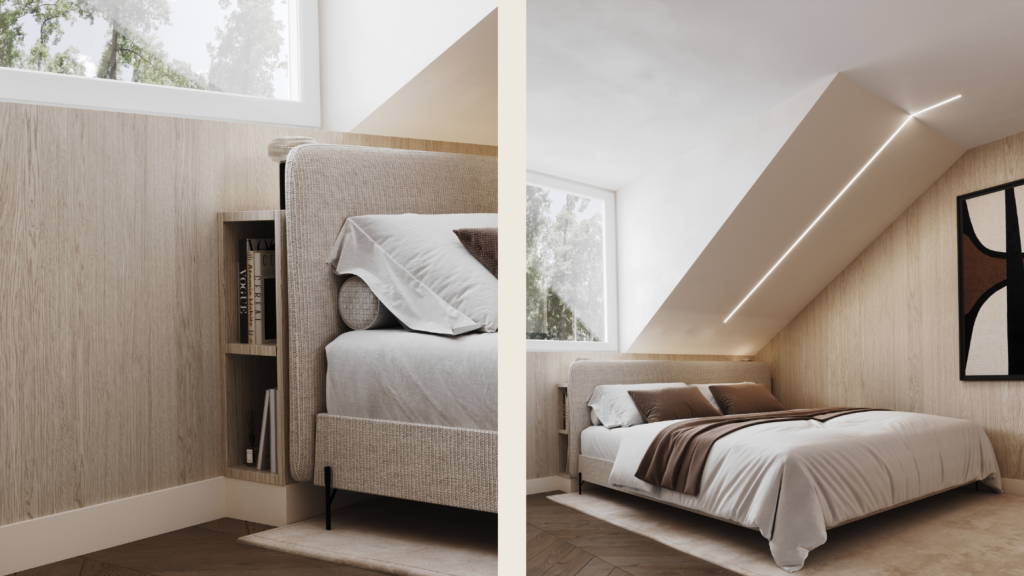
The most important aspect of the bedroom design was peace of mind - but not at the expense of functionality.
Hidden cupboards, a soundproof wall and a multifunctional surface behind the bed all serve to make the space truly livable. These solutions are unobtrusive, yet they are fundamental to the quality of use.
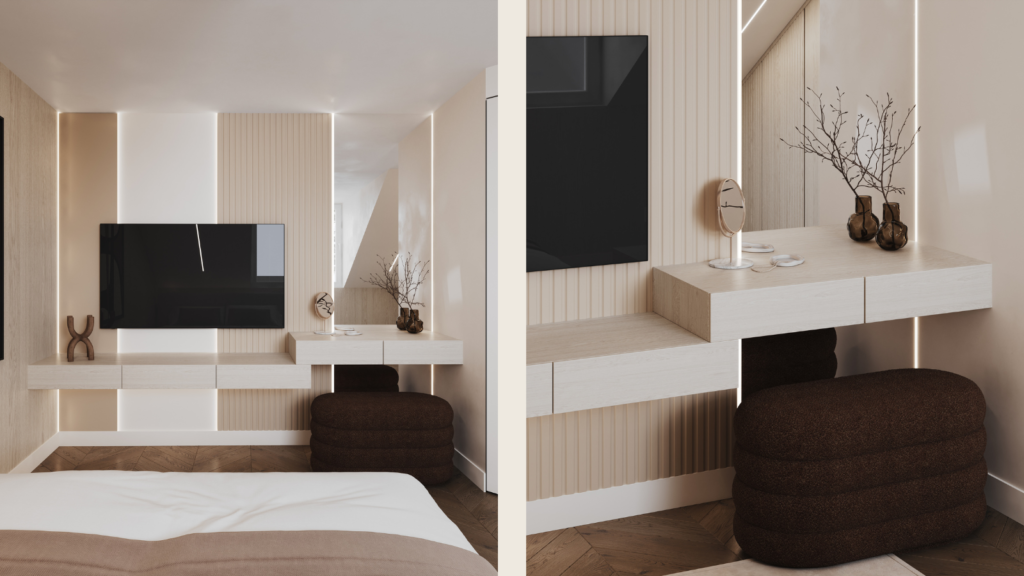
A highlight is the media wall, which continues as a dressing table. This is not only practical, but also helps to free up space in the bathroom - especially in a family home.
One of the most important lessons of the upstairs living space design can be seen here:
good design is not visual, it works.
Children's room built on a timeless foundation
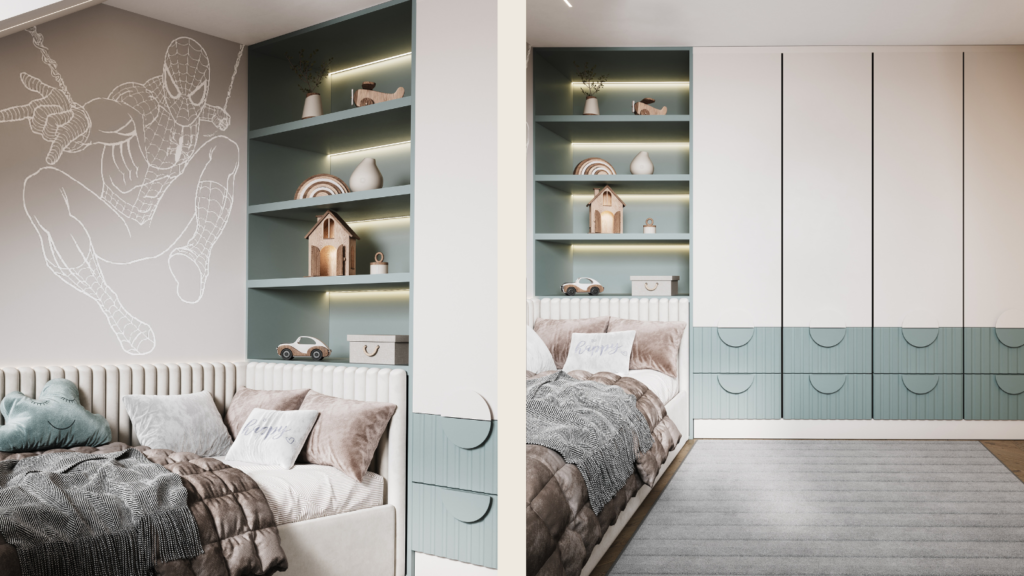
When it comes to designing a children's room, there is a growing trend to plan for years rather than a lifetime.
The furniture - bed, wardrobe, table - has been consciously designed to remain usable over the long term. Change is not reflected in these but in the decoration, walls and accessories.
The pull-out bed, built-in connection points and handy storage are all designed to help the space evolve with your child's needs.
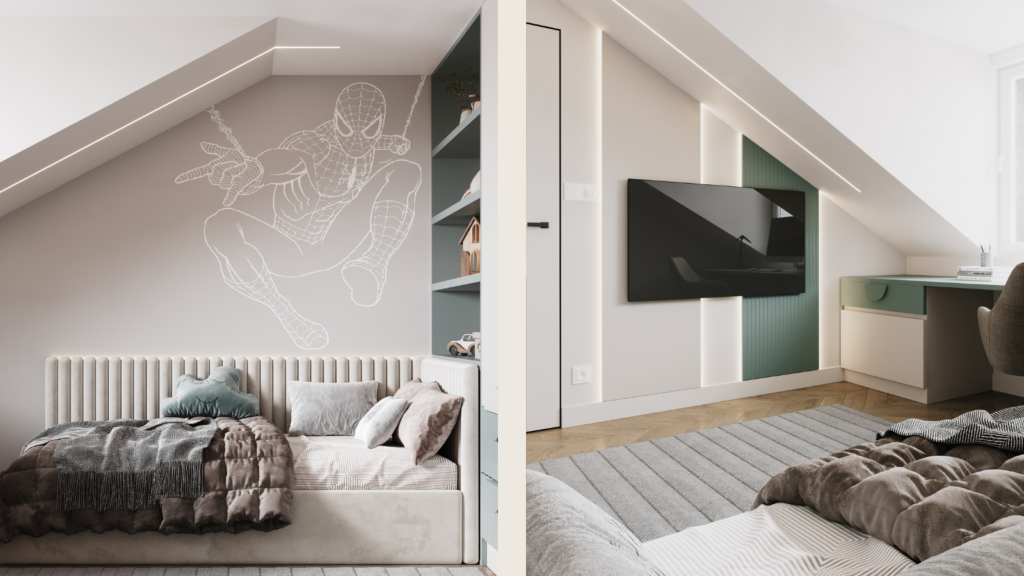
Today a fairy tale - tomorrow a world of its own.
This kind of thinking is particularly important when designing upstairs living spaces, where the function of the rooms changes over the years.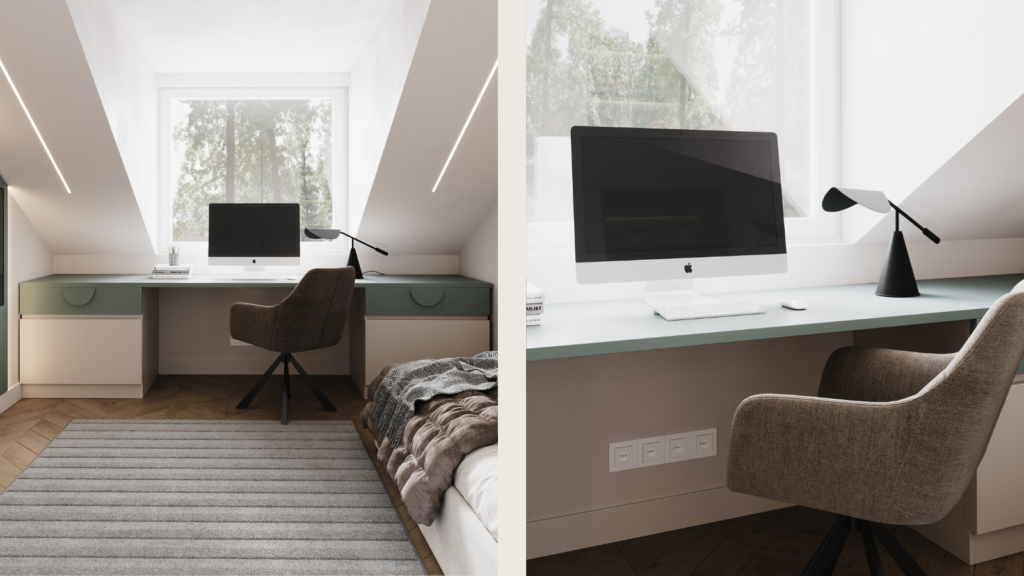
Summary: how to unify the living space on the first floor
The design of the upstairs living space is not a separate task, but a logical continuation of the whole home. The key considerations are:
- Continuity of material use - recurring elements, subtle transitions
- Functional stratification - every space knows more than first meets the eye
- Long-term thinking - especially for children's rooms
- Hidden solutions - for peace of mind
A well-designed floor is not ostentatious, it doesn't want to stand alone - it wants to be naturally connected to the whole.
👉 If you're thinking about a similar project, please contact us: Contact